
BOOTHSMANSHIP
- Carl Henry
- Feb 29, 2024
- 10 min read

By now, you should be starting to realize that the key to trade show selling is planning, using your time wisely, and taking advantage of the high-energy atmosphere. It is time to put that knowledge to work. In this blog, we are going to talk about boothsmanship – my word for the combination of entertaining, prospecting, and qualifying you will need to master to make your trade show selling efforts a success.
The process starts before you even meet your first visitor. That is because, as always, preparation is more than half the battle. Having a clean and pressed suit, corporate apparel with your company logo, plenty of strong sales literature, and being ready to put your best foot forward are prerequisites. Telling professionals to eat right, get some sleep, and study up on their product knowledge might seem like basic advice, but it's hard to beat in terms of real-world impact. You can't win the game if you don't show up ready to play.

It is also a good idea to show up early on the first day and take a walk around the trade show floor. Find out what other groups are presenting, what kinds of new products they are going to be unveiling, and most importantly, what sorts of things are going to be on your buyers’ minds. Just as you need to know your competition in any sales setting, it makes sense to find out where the buzz is at the show. Ideally, it will be with you and your company. If it is not, however, it is a lot better to know that beforehand than it is to be blindsided by your prospects later.
Lastly, be sure to put on the right attitude. Trade shows are all about excitement and momentum. You do not have to be jumping out of your booth like an insane person, but make sure your energy level is high. Wear a smile, move around a bit; the more you act like you are in a good mood, the more likely you are to find yourself in one. There are a lot of things competing for your buyers’ attention, and the last thing you want is for a hint of negativity to keep them away.
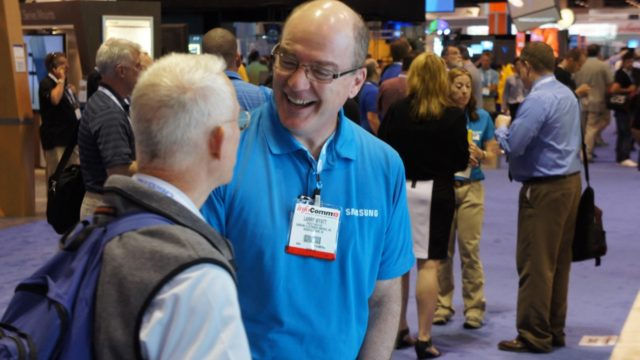
Your first – and possibly most important – boothsmanship skill is greeting people effectively. Again, this sounds like an area where professional salespeople would not require a whole lot of coaching, but I have seen enough terrible introductions to know better. When someone walks by your booth, they should get the immediate impression that you are a competent professional who is feeling positive. That means resisting the urge to mumble, look at your feet, or fiddle with brochures as prospective customers go walking by.

In the same way, try to meet each person by saying something that is engaging, but not threatening. One of my personal favorites is, "What was it about our booth that caught your eye?" It is a simple question, but one that immediately invites an open response, and might steer you toward a conversation about that person's background or needs. Most importantly, however, it shows them that you are focused on the task of helping them out. Lots of lazy salespeople and trade show teams will try to open conversations by talking about the weather, asking if the visitor saw the game last night, or even remarking about how their feet hurt. None of these is going to leave a very good impression, much less move you any closer to a sale.
Once the introductions have been made, qualifying is the name of the game. You want to find out exactly who your new prospect is, what company they are with, and whether they have a buying interest now or in the future. If you can, you will also want to find out whether they are part of a buying team, and which personality style traits are most dominant. You will remember that I said that to have success at a trade show, you must keep the selling process intact. That advice still applies. While you will certainly be moving faster than you would if you were dealing over the phone or in another setting, learning about the customer’s needs and wants still sets the stage for everything else that comes later, so don't try to skip this step and move directly into your sales presentation.

In fact, I recommend you try a technique that I frequently mention in my other books and seminars: Take out a clean sheet of paper – or in this case, maybe a small pocket-sized notebook – from your pocket. Not only will the act of taking notes while your prospect is talking help you to remember to ask the right questions, but it also shows that you're paying attention to what they are saying. And, even a few things jotted down on a napkin can end up being very valuable later. That’s because, no matter how intense the conversation, trade shows are fast paced. Just because you’re deeply involved with a prospect and potential sale at this moment doesn’t mean you’ll remember the conversation later – especially after you have spoken to another fifty people. Take my advice and jot down a few things right away; it can save a lot of sales in the coming weeks and months as you do follow-up.
One word of caution when trying to qualify prospects in a hurry, though: Do not get caught staring at name tags. What do I mean by this? It is only human nature, especially when we are trying to make big sales in a hurry, to look for the prospects that can help us and ignore everyone else. Usually, this takes the form of someone at a trade show booth ignoring potential customers who are not inside their territory. Since there is not a commission to be made on those sales, they try to push these people away and focus only on clients in their region.
This is a big mistake for several reasons. First, and most obviously, any sale that brings new revenue into your company is bound to be good for you. That means more cash to spend on research for new products, sales incentives, better customer service, and so on. Secondly, you never know who that person might be able to introduce you to, or what other connections they have in the buying chain. It might be that the prospect you just ignored has a colleague in your region who could be interested in what you sell, so keep that in mind. Finally, you should realize that a good trade show team is a bit like a pit crew at a car race – everybody needs to be working together as quickly and efficiently as possible for your team to win. Make an agreement with the other salespeople to qualify prospects and hand them over to one another, or to take good notes and forward the appropriate contact info. In most cases, it's not going to take you that long, and the long-term benefits can be huge. The bottom line is that trade show selling is a team sport, so be a team player.

So, let us assume you have found a prospect with that definite need and some interest in your products. What should you do now? Because time is so limited, there are decisions to make. If you suspect your prospect is lukewarm or does not have the authority to decide, I recommend taking as many notes as you can in the booth and then setting a firm schedule for follow-up. It might not be as valuable as a sale in hand, but it’s better than the alternative of taking their business card and leaving your future sale to luck. Remember, once you have both returned to your offices and day-to-day routines, your chances of making a successful proposal go down dramatically. Stack the odds in your favor by making the most specific appointment you can.

On the other hand, if this is a buyer with an immediate need, and one you think you can close at the trade show, I recommend trying to find a place away from the trade show floor to talk for a few moments. Many facilities have special rooms set up for this exact purpose, but if the location you are at does not, consider a lobby or even a nearby coffee shop. You will want to have scouted these places beforehand, of course, so you can have options that allow you to travel quickly and offer few distractions.
A good piece of advice that I can pass along from dozens of trade shows is not to overlook meeting times that fall outside your booth hours. Lots of salespeople will arrange dinners and cocktail hours with their best clients, but most overlook breakfast and lunch. Your prospects are still going to be eating – and listening – during those times, so why not use them productively?
Regardless of where you meet, however, try to move the sale into high gear. Use face time with the customer to find out what their real needs are. What is it about their situation that is keeping them up at night, and what sorts of solutions could they use to make things better? This is the same information you would be trying to get in a different sales situation; at a trade show, you are just going to get it faster.

Working a trade show booth is a bit like speed dating. You are going to have dozens of potential customers right in front of you, but to make the most of it, you will need to make quick decisions. Learning to qualify visitors quickly while still holding their attention is a valuable skill, and one you might want to work on before the show even begins. Practice asking good, open-ended questions, and then setting quick appointments for follow-up. Your goal should be to find the best prospects in a matter of minutes, and then use the enthusiasm and personal contact to advance the sale in a short amount of time. Once you have done that, you will be ready to make impactful onsite presentations.
Pullout: Trade Show Time Management
Just as dieting is as much about avoiding the wrong foods as about eating the right ones, trade show time management does not just require that you quickly qualify the best prospects, but that you do not waste valuable minutes with men and women who are never going to buy. And unfortunately, there are going to be many of them on site, mixed in with your potential customers.
Luckily, most of these folks are going to be easy to spot right away. The first group will be made up of students. Young people can be fun to talk to because they often bring in energy and excitement to an industry trade show that is even above and beyond what others are feeling. It might be their first time out at a professional event, and they are filled with questions and ideas… all of which they are happy to discuss with you at length. But as entertaining as they are, students aren't typically able to buy anything, so it is best to keep your interactions with them on the brief side of things and offer your contact information if you want to answer some of their questions at a time when you're less busy.
An exception to this rule would be if your company is recruiting, or if you place an emphasis on working with young people. I do know of a manufacturer that tries to actively involve students with their products. Their assumption is that a few minutes spent showing them how things work can create a customer for life, and they have been successful with it. So, if that is a part of your sales strategy, then you should obviously go with whatever direction your sales manager gives you. And even if it is not, do not be rude to college kids or new graduates who are trying to make contacts. In most cases, they are simply trying to learn about the industry and share their enthusiasm, and you never know – they could end up working for, or being related to, one of your biggest prospects or clients.
A second group that can kill your productivity is retirees. These are the men and women who have recently gotten out of the industry, or soon will. They are at the trade show to help with the transition, or because they are still a part of an association. With a lot of free time on their hands, they may try to pull you into long storytelling sessions or other protracted conversations. Again, the rule of thumb is to be cordial and polite, but do not lose a huge chunk of time with someone who has no buying needs or authority.
And finally, there are your run-of-the-mill contacts who are "just interested" in looking but have no need for your products or decision-making power. If you have been in sales for a while, then you have undoubtedly encountered hundreds of these folks before and already know what to do: take their information, qualify them as thoroughly as possible, and then move on to actual prospects. They might be charming, fun, or engaging, but one thing is for certain – they are not buying.
You might find it helpful, as many trade show veterans do, to designate one or two members of your booth team as a "sweeper," or take turns filling this role. What does a sweeper do? It is their job to occupy students, retirees, and other timewasters while the sales staff is busy qualifying visitors. Often, they can have a brief video to show, or can launch into a quick, fun product demonstration that might draw in even more traffic. No matter how they do it, however, their main objective is to take unqualified prospects away from the busy sales team.
Sweepers can either keep their eyes open for likely targets or wait for a code phrase from one of the sales staffs, but they should be ready to step in and occupy visitors as needed. Many companies never think to use one, but they can have an enormous effect on the profitability of your trade show booth.
While I have devoted most of this section to mentioning timewasters, since they are typically your biggest problem, remember that the opposite is true as well: Hiding alongside your normal buyers will be “super prospects,” the C-Level executives who set purchasing policies for their companies and can change your career in an instant.
Given that many organizations spend well into seven figures on their trade show booths, travel, and products, you can be sure that the men and women signing the invoices are going to show up. They might not be in the general sessions, but they will make one or two passes through the floor to see what is new and hear what people are talking about. In a perfect world, you will already know the names and faces you should be looking out for so you can be prepared if one of them strolls by. If that is not possible, however, at least have a game plan in mind in case you find yourself face to face with a person who can make a major purchase from you. Those opportunities don’t come every day, and they aren’t going to last long, so be on your toes.


Comments