
GIVING LIVE DEMOS THAT SIZZLE
- Carl Henry
- Mar 11, 2024
- 5 min read

In many ways, giving a live demo at a trade show is the same as it would be anywhere else. You're still going to show off the same products and solutions, emphasize the same benefits, and receive the same feedback that you always will. But, as with all the other steps of the selling process, things are going to be sped up a little bit.
Make sure you have the right people present. If your customer is part of a buying team, then try to give your demo to all of them at once; giving the same information five or six times is a waste, especially when you consider that they are all likely to have some of the same questions and concerns.

From there, the best advice I can give you is to move quickly ... but not too quickly. Here's what I mean: The energy and excitement of a trade show mean that you can likely get away with hitting the highlights of your product and its benefit to your clients. With everything that's going on, both you and your prospects will be a bit anxious to get back to what you were doing. It's not a bad idea to practice your presentation in the weeks leading up to the trade show and get it down to the point where you can hit the high notes in five or ten minutes. Also, spend some time thinking about the questions you're likely to be asked, and know the answers so you won't have to go looking for them when you're at the trade show. Again, this means having a firm grip on your product knowledge, customer service policies, and other details.
Having taken these steps, you should be ready to talk about what you sell, with some insight and enthusiasm, on just a few minutes’ notice. Use that energy to move quickly, but without drifting into the kind of rapid-fire presentation that people associate with too much pressure. Even at a trade show, customers want to make good decisions at their own pace, so slow down enough for them to feel involved.
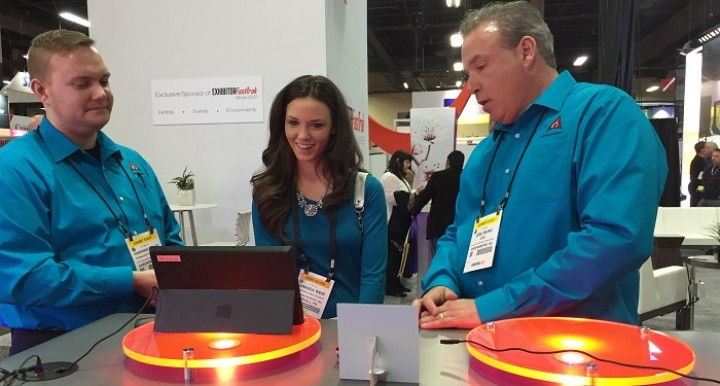
I like to accomplish this in two different ways. First, I make sure to refer back to my written notes several times. Since the client has already told you exactly what they're looking for, why they're looking for it, how soon they need it, and so on, why not build that information in to your presentation? Going back to it shows you're paying attention to what they've told you, while at the same time forcing you to pace your demo.

And secondly, I try to engage every customer physically, mentally, and emotionally with the solution I'm presenting. While I have gone into much greater detail on this point in The MODERN Sales System, I consider it to be one of the most powerful – and underused – ideas in sales. People don't buy because you want them to; they make decisions that they feel are going to help them in the future. By letting your prospect hold the product in their hands, try it out, or at least imagine themselves using it in the future, you help them to create a sense of ownership that will carry over into the close. It's a simple technique, but it works extraordinarily well. I suspect the reason more salespeople don't use it, at trade shows or otherwise, is that they get into a rush and forget. Take that piece of information as one more reminder to go quickly, but never skip steps in the selling process.
That includes pausing for cues and feedback. Because you'll be moving toward a close much faster than you normally would, you'll want to throw in some checking questions along the way. When you show off a major feature, or draw out a return on investment calculation, take a second to ask, "Does that make sense to you?" It can be hard to slow down your own momentum, but every missed point in your live demo is going to reappear as an objection later, so try to make sure everyone is with you at each step.

Often, you can judge the reaction you're getting simply by paying attention to each prospect’s physical response. One of the huge advantages to giving presentations in person is that you have an immediate gauge on how close your customers are to a buying decision. If they're excited, and on the edge of their seats, you'll want to keep things flowing. If they keep glancing at their watch or looking for excuses to get away, however, you know it's time to return to one of your main points before you miss the opportunity and lose their attention for good.
As I said in the beginning of this chapter, giving demos at a trade show isn't necessarily that much different than giving them in a different setting. The main thing to remember is that you'll have to move quickly while still engaging your customer. You'll have the benefit of being able to see their reactions from a few feet away, but also the challenge of holding their attention in a carnival-like atmosphere.

All in all, however, finding the balance probably isn't as hard as you think. Simply practice your presentation, know what you need to mention inside and out, and then pay attention to your customer – the rest will take care of itself.
Pullout: Call in Reinforcements
I've already made the point that trade show selling is a team sport, but nowhere is that truer than in the presentation stage. The goal is to sell quickly, so you should use every advantage you have available – and there are probably going to be at least a couple of them.
First, your company might be utilizing a professional booth exhibition firm. It's a growing trend in the industry, and one that can help you close business faster. Basically, your company might have a team of professional spokespeople, demonstrators, or even models whose job it is to show off the very best parts of what you're selling. If so, let them do their job. Introduce your prospects to them, stand back while the demo is given, and then be on hand to assist with any questions. Some salespeople are reluctant to share their prospect’s attention with someone else, but you aren't in competition with the booth staff and they can help you make more money.
Additionally, you probably have several non-sales staff from your organization at the trade show. They represent an asset you wouldn’t have in a normal sales setting, so why not use them? Engineers can explain features and upgrades in your products that you might not know about; customer service professionals can talk about ongoing care; financial representatives can discuss financing, and so on. Show your customers that your company is bigger than just you – let them experience, and buy, a whole team of professionals who will be working to help them enjoy or profit from their purchase.


Comments